Newsletter Subscribe
Enter your email address below and subscribe to our newsletter

 ByJohn A
Token burning reduces circulating supply by permanently removing tokens, while total minted supply remains fixed. This shifts the floating supply and can signal deflationary intent. In practice, burns alter liquidity, order-book depth, and price signals. Transparent, auditable burn data are essential for credible governance and credible scarcity metrics. The measurable burn rate affects incentives, capital allocation, and perceived asset quality, raising questions about long-term impact. How these dynamics play out across markets warrants careful, data-driven analysis.
Token burning is a deliberate reduction in a cryptocurrency’s circulating supply, performed by sending tokens to irrecoverable addresses or otherwise removing them from circulation. The mechanism alters supply mechanics by reducing total tokens and influencing price signals.
Burning incentives align holder behavior with long-term value, while governance implications require transparent rules, measurable outcomes, and auditable reporting to sustain credible, freedom-respecting policy design.
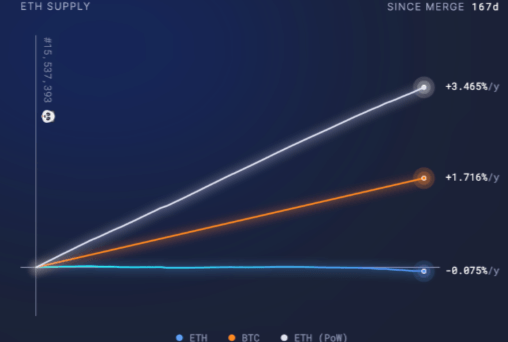
Burning changes supply in practice by converting circulating tokens into irretrievable assets, thereby reducing the float while total minted supply remains constant. Burn mechanics quantify annualized burn rates and net reductions. In policy terms, this alters liquidity, informs market perception, and affects effective circulating supply. Measurements rely on entropy-adjusted metrics, ensuring transparent, auditable tracking and comparability across networks and burn schemes.
See also: thedesperateblogger
In practice, the real-world effects of token burning manifest through measurable shifts in price dynamics, scarcity signals, and participant incentives, each linked to observable changes in liquidity, order-book depth, and anticipated supply trajectories.
Burning incentives emerge as supply-side discipline alters marginal cost, while market signaling redirects capital toward deflationary assets, reinforcing price resilience and disciplined participation without excessive volatility.
Evaluating a project’s burning claims requires a structured, evidence-based approach that separates theoretical reductions in supply from realized liquidity and price effects. The analysis emphasizes transparent burn mechanics and verifiable data, with emphasis on governance transparency and independent audits.
Risks include model fragility, misaligned incentives, and potential manipulation, necessitating clear, quantitative benchmarks, periodic disclosures, and governance-responsive remediation to sustain market confidence and freedom.
Token burning reduces circulating supply by permanently removing tokens from circulation, while total minted supply remains unchanged. In practice, this tightens liquidity, shifts price signals, and can elevate scarcity-driven incentives. Transparent burn data and auditable reporting enable credible governance and meaningful comparisons across projects. However, claims must be evaluated against measurable burn rates, timing, and completeness of burns, as misrepresentation can distort capital allocation. In the end, burn is a policy lever, not a guaranteed profit—its impact hinges on credible implementation. Like a lighthouse, it guides perception and decisions.